creating a good course reading list is the most difficult, most time-consuming, and most arduous part of designing a syllabus. it is also, i think, the most important.
good readings engage and inspire students and professors. good readings encourage students and professors to attend class and participate in class discussions. good readings make students and professors curious. good readings make students and professors want to learn more.
naturally there's not a single way to put together a set of course readings but here's a few tips that have helped me along the way.
1. collect and compile potential readings all year round. face it: most syllabi are created the weekend before classes begin. instead of designing your reading list under duress, do it all year around. the next time you read something that relates to a course you teach or want to teach, place the reading in a folder devoted to your course. for online readings, consider opening a
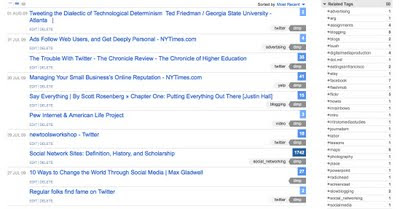
delicious account and start a tag for each class. for example, throughout the year, when i come across a relevant reading for my digital media production class, i save it to delicious and tag it "dmp." when i'm ready to put together my syllabus i have a year's worth of relevant readings to chose from.
 2. use year-end evaluations to get student feedback - positive and negative - about readings.
 at
my university, professors are allowed, if not encouraged, to add their own questions to the more standard evaluation forms. each semester, i ask my students: "which reading or readings was your favorite?" and "which reading or readings was your least favorite?" each semester, nearly without fail, one or two readings are mentioned by the majority of students as their favorites and least favorites. favorite readings are nearly always included in the next version of the class while least favorite readings are often (yet not always) ditched.
3. assign different kinds of readings. if so few of us read academic journal articles, why do we inflict them upon our students? although i do not oppose including an academic article or two in my syllabi, i'm certainly not going to overwhelm my students with articles designed for a small - and shrinking - audience. instead, my landscape for potential readings includes popular books, popular magazines, and (once) popular newspapers.
4. assign different formats of readings. i love words on printed pages but i'm aware that good readings come in many forms. in my courses, "readings" come from printed media like books, journals, magazines, and newspapers, but also come from radio, film, television, and - increasingly and especially - the internet. i routinely assign brief and not-so-brief
ted talks to my students and find that they engage in the video's ideas as smartly, if not more smartly, as they would have with a print-source.
5. look for and select free readings when possible. many of us have been talking about a time when all the readings we want to assign would be online, accessible for free. for many fields, especially my own field of media studies, that time is now. last year's version of
digital media production was comprised entirely of free, online readings. it worked.
 6. finally, please don't assign the same readings over and over and over again.
 when we assign the same readings each semester, we get lazy. we get bored - and boring. when we're bored, our students are bored. and when everyone's bored, no one learns.
the best advice i received on this matter was from
jeff paris, a popular professor of philosophy at USF. at a teaching workshop conducted for new faculty in 2006, jeff suggested - i'm paraphrasing - that we never teach the same class. once we feel comfortable with a class, jeff said, once we know what it's about and what to assign, kill it. ditch it. or give it away.
and begin designing a new one.
once you have your reading list, add it to your syllabus, save the document, shut down your computer, and celebrate your progress.


