Thursday, November 02, 2006

some day soon RCCS's book reviews will allow comments

soon, i hope to enable comments on the monthly book reviews featured on RCCS. essentially, the book reviews and author responses should act like blog posts - it would be great if people could 1) read the reviews and then 2) add comments to the reviews. right now i'm working on a number of projects but i hope to commentify RCCS by summer.

reading mark bernstein's two blog posts - Figurski and Women, a Footnote - makes we wish the comment feature were working NOW.

bernstein is founder and chief scientist of eastgate systems. established in 1982, eastgate is best known, i believe, in academic circles and has published some of the most classic works of what some call "serious hypertext," including shelley jackson's patchwork girl, stuart moulthrop's victory garden, and michael joyce's afternoon, a story. eastgate is also the publisher of richard holeton's figurski at findhorn on acid, which jessica laccetti reviewed for RCCS for november, 2006.

bernstein takes issue with a number of things in the review, but focuses especialy on a point laccetti makes in a footnote about gender and hypertext. laccetti notes:
    Additionally, the prefix, "hyper" problematizes feminist thought (which has sought to destabilize hierarchies such as mind over body and vision over touch) as it adds inscriptions of hierarchy to an already seemingly hierarchical and male-dominated field. The theorists are male (Bolter, Landow, Amerika, Lanham, Joyce, Aarseth, Moulthrop), the hypertexts often discussed are written by men (Landow, Bolter, Joyce, Coover, Amerika), and the visions they present us with are distinctly male.
bernstein's post notes many female theorists including Kate Kayles [sic], Marie-Laure Ryan, Diane Greco, Irina Aristarkhova, Anja Rau, Wendy Morgan, Susanna Pajares Tosca, and Jill Walker, female industry researchers Cathy Marshall and Wendy Hall, and female hypertext authors Shelley Jackson and Deena Larsen. cool.

i'm grateful that bernstein has brought attention to these scholars, researchers, and authors; i am familiar with some but not all. but i wish bernstein weren't so belligerent. his posts are extremely condescending. it's as if he wants to argue a point rather than foster a dialogue. i neither study nor read as much hypertext as i did as a graduate student (does anyone?), but the past and present field of hypertext studies is, like all academic fields, a field where males occupy the most privileged places, positions, and voices.

one thing bernstein skips is the novel itself. i have not yet read figurski at findhorn on acid, but how can i not read it after jessica's description:
    A general synopsis would spotlight the main protagonist Frank Figurski who has recently concluded his jail term for the murder of Professor Quentin Kingsley. Since leaving jail, Frank is on a mission to uncover the authenticity of a seventeenth-century mechanical pig (which washed up on the beach in Findhorn Park). Frank's journey will be complicated and perhaps even dangerous; he is not the only one after the truth and he is on acid.
now that sounds like an interesting hypertext novel.

(one quick note of clarification: bernstein writes that the resource center for cyberculture studies is at the university of maryland. yo, RCCS is at the university of san francisco; it hasn't been at maryland since september, 2001.)

at RCCS, books are just the beginning - they are read by people who then generate reviews. soon, i hope, RCCS reviews will be another beginning - they will be read by people who will generate comments about the books, comments about the reviews, and comments about the comments.

Wednesday, November 01, 2006

USF event: school of americas halloween dinner

i first learned about school of americas watch in the early 90s, when i was finishing school at UCLA. at the time, i didn't want to believe that the US government would sponsor a school that would train their students how to torture, how to instill fear among a population, and how to overthrow democratic governments. over the years i continued to hear about the school of americas watch, mostly through their annual vigil in november at fort benning in columbus, georgia.

i first heard about USF's school of americas watch from amber mcchesney-young who is enrolled in my course digital democracy. amber, with the help of many other students including bethy whalen and ryan ericksen, has spent much of fall semester organizing last night's school of americas halloween dinner. the dinner is the main fundraiser for USF's school of americas watch and generates funds necessary for fourteen students and staff to travel from san francisco, california to columbus, georgia to be part of the vigil and protest to shut the school down.

the event was awesome. it was packed - i'm not good with numbers but i'd predict between 200 and 300 people, mostly students, showed up, many in halloween costumes. following a tasty burrito dinner, there was a brief talk about torture, several spoken word performances, and a halloween costume contest (judges included members of USF's jesuit community). there was also a SOA watch video by coreen salamanca and a musical performance by francisco herrera.


last night was educational, inspiring, and fun. it raised funds and consciousness. it filled our bellies and our hearts. but the best thing about last night was that it was organized by students.

later that night, sarah and i walked a few blocks from our pad to the castro to witness the gyrating spectacle called halloween. we joined a reported 400,000 other people, mostly peaceful, and got out of there before ten people were shot. one day, americans will learn to party in the streets without violence.

Tuesday, October 31, 2006

san francisco art institute

yesterday for lunch i made my way to north beach, to the san francisco art institute, to meet meredith tromble - an artist, writer, editor, professor, and co-founder of stretcher. i initially met meredith online, through RCCS - first, when she reviewed karen riggs' granny @ work: aging and new technology on the job in america and later when she reviewed steven shaviro's book connected, or what it means to live in the network society. it was great to meet her offline.

sfai rules! it's a dramatic hill-top campus surrounded by alcatraz and coit tower. there's 600 students, nearly all artists, and a ton of activity in every direction. while on campus, meredith gave me quick tour of the beautiful library and introduced me to the staff of leonardo, which enjoys sfai as its institutional home.

after saying goodbye to meredith, i strolled around and found the diego rivera gallery, a student-run exhibition space featuring a diego rivera fresco from 1931 titled the making of a fresco showing the building of a city. stunning.


somewhere along the way meredith mentioned hidden ecologies, a project i need to learn more about.

usf event: media studies colloquium featuring yours truly

please join us for the second talk in our media studies colloquium! the title of my talk is "Web 2.0: Beyond the Hype." the talk will discuss what is meant by web 2.0, critique the hype around web 2.0, and offer what i believe to be progressive and exciting about web 2.0. time permitting, i will offer some brief notes regarding my newest project (top secret code name: interfacing golden gate park) that incorporates some of the key concepts of web 2.0.

details:
    who: david silver, media studies
    what: web 2.0: beyond the hype
    when: wednesday, november 1, 3-4 pm
    where: UC 400
the colloquia continues on november 15th with jeremaiah opiniano, yuchengco media fellow at USF's center for the pacific rim, who will present on "the outgrowth of a journalism for a distributed philippine economy."

hope to see you there!

new reviews in cyberculture studies (november 2006)

a new batch of kindness ...

[via RCCS] a new set of book reviews for november 2006:
  1. Computer Mediated Communication: Social Interaction and the Internet
    Authors: Crispin Thurlow, Laura Lengel, & Alice Tomic
    Publisher: Sage, 2004
    Review 1: Antonina Bambina
    Review 2: Mark D. Johns
    Review 3: Michele Willson
    Review 4: Monica Whitty
    Review 5: Gerhard Fuchs

  2. Culture + Technology: A Primer
    Authors: Jennifer Daryl Slack & J. MacGregor Wise
    Publisher: Peter Lang Publishing, 2005
    Review 1: Glen Fuller
    Review 2: Louise Woodstock
    Author Response: Jennifer Daryl Slack and Greg Wise

  3. Figurski at Findhorn on Acid
    Author: Richard Holeton
    Publisher: Eastgate Systems, 2001
    Review 1: Jessica M. Laccetti
    Author Response: Richard Holeton

  4. Synthetic Worlds: The Business and Culture of Online Games
    Author: Edward Castranova
    Publisher: University of Chicago Press, 2005
    Review 1: Leif Schumacher

  5. The Mirror and the Veil: An Overview of American Online Diaries and Blogs
    Author: Viviane Serfaty
    Publisher: Rodopi, 2004
    Review 1: Laurie N. Taylor
    Review 2: Sarah Michele Ford
    Review 3: Natalie Bennett
    Review 4: Tama Leaver
    Author Response: Viviane Serfaty

  6. Understanding Me: Lectures and Interviews
    Editors: Marshall McLuhan, Stephanie McLuhan, & David Staines
    Publisher: MIT Press, 2003
    Review 1: Christy Dena
enjoy. there's lots more for december.

Monday, October 30, 2006

film screening: DEMOCRACY ON DEADLINE: The Global Struggle for an Independent Press

with oaxaca and brad will on my mind, i'm disappointed that i'll be teaching during wednesday night's free and public screening of democracy on deadline at the oakland museum of california.

following the film will be a panel discussion featuring:
  • Raul Ramirez, News and Public Affairs Director, Executive Producer of KQED Public Radio;
  • Chauncey Bailey, Travel Writer, Oakland Post
  • Dorothy Kidd, Chair of the Department of Media Studies, University of San Francisco; and
  • Bob Egelko, Staff writer San Francisco Chronicle

Saturday, October 28, 2006

proud to be a union member

faculty at USF are unionized. the university of san francisco faculty association is local 4269 of the AFL-CIO. i have a lot to learn about what this means and i look forward to learning more.

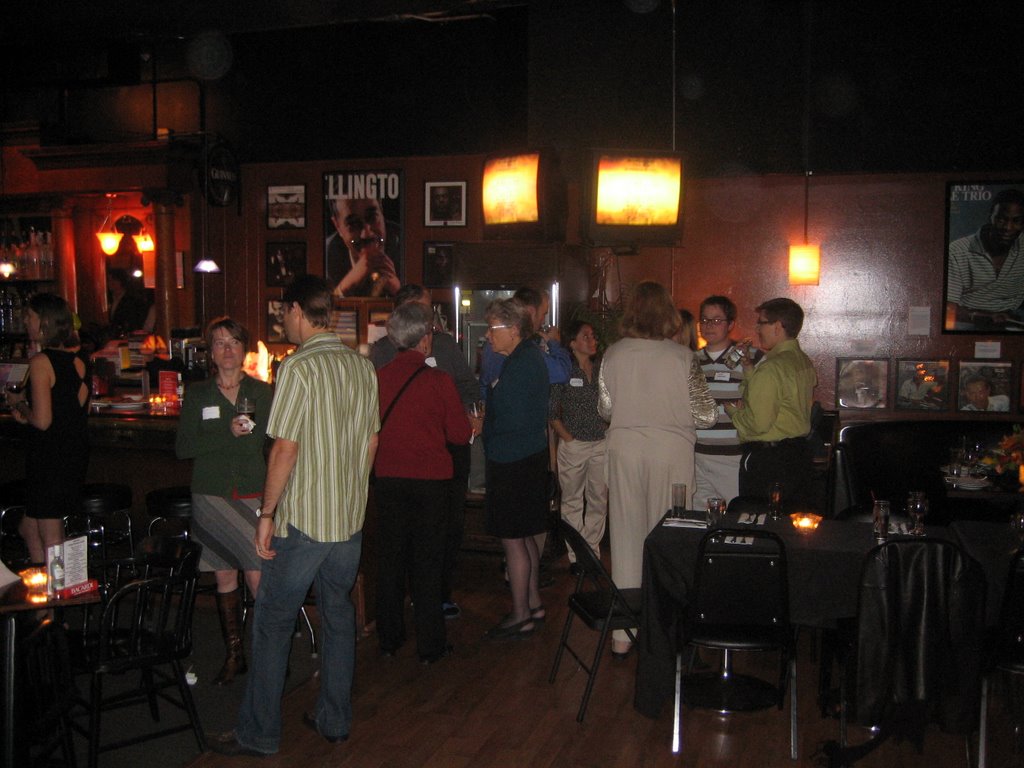
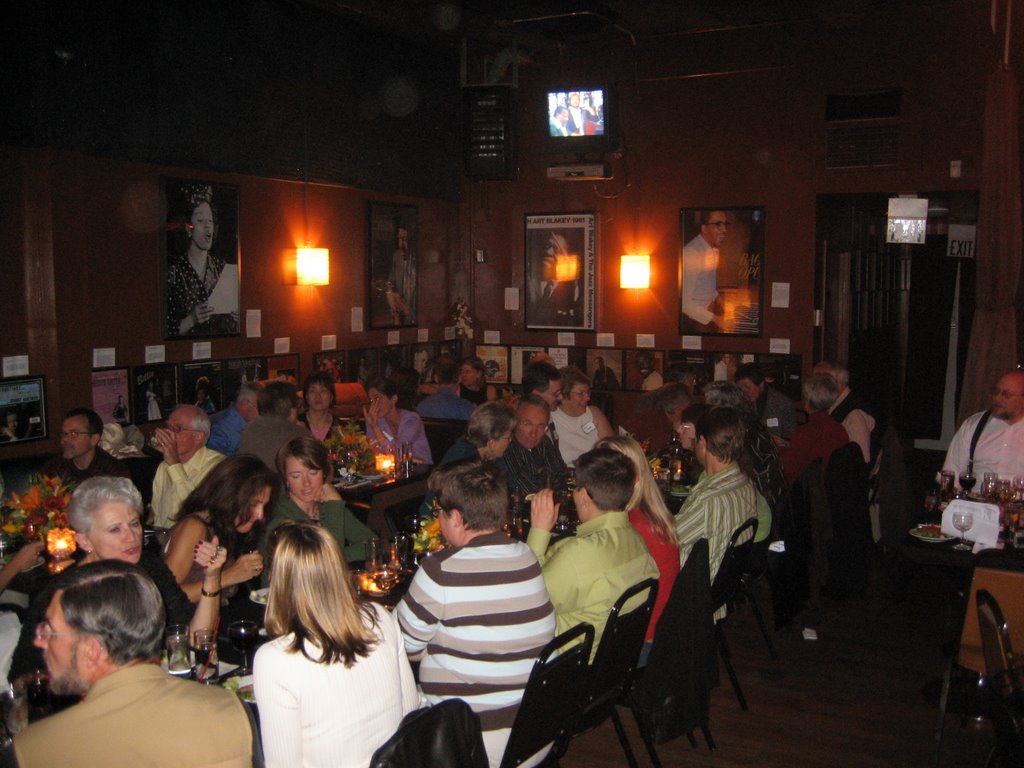
last night, the union hosted a dinner for all new faculty and their partners. the dinner was at savanna jazz, in the mission district, and was followed by live jazz.

between multiple orientations, numerous new faculty lunches, and last night, new profs at USF have had many opportunities to get to know each other - as colleagues and as friends. i cannot imagine a more interesting, engaged, and fun cohort of new professors.


Wednesday, October 25, 2006

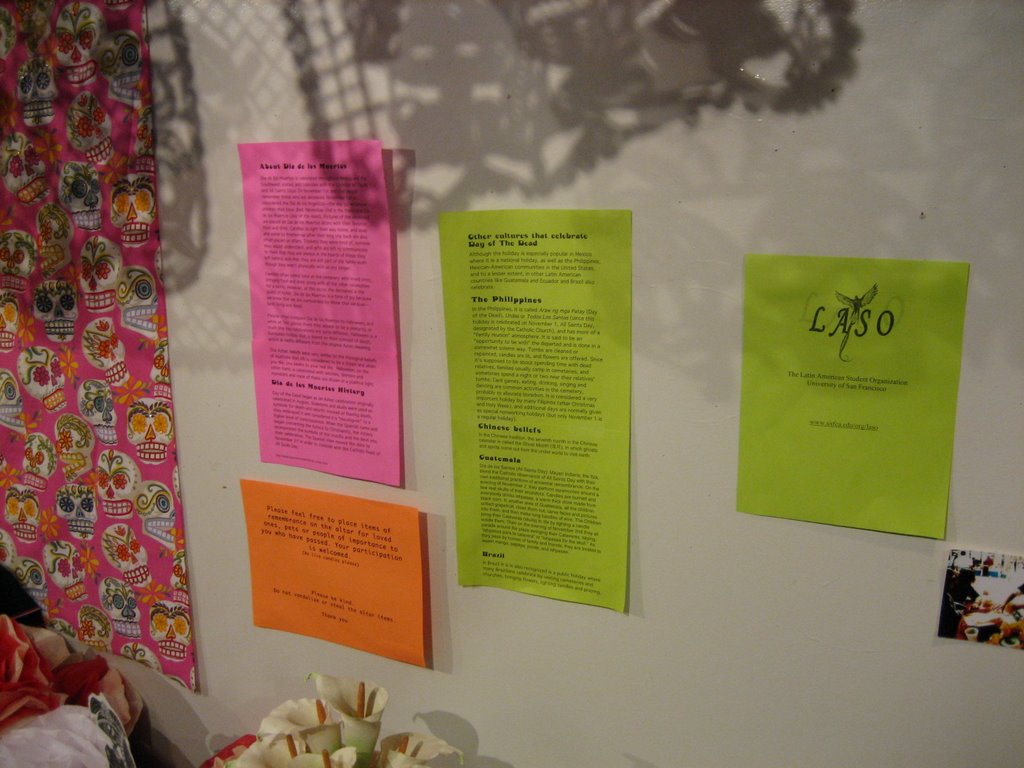
USF exhibition: dia de los muertos / day of the dead

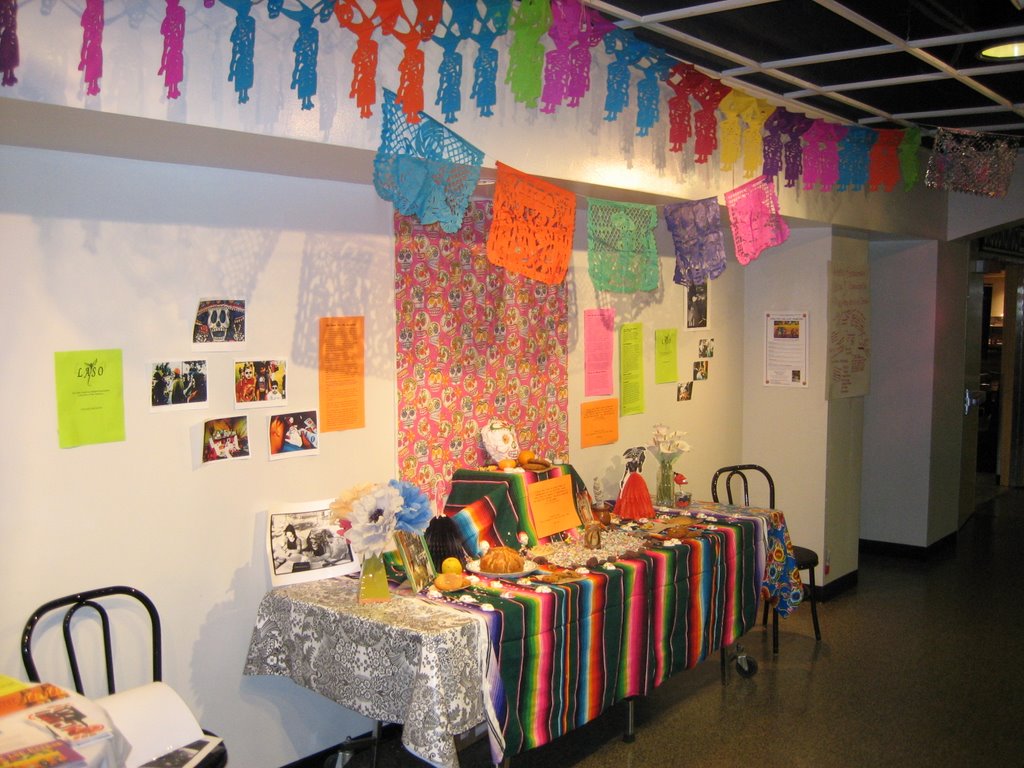
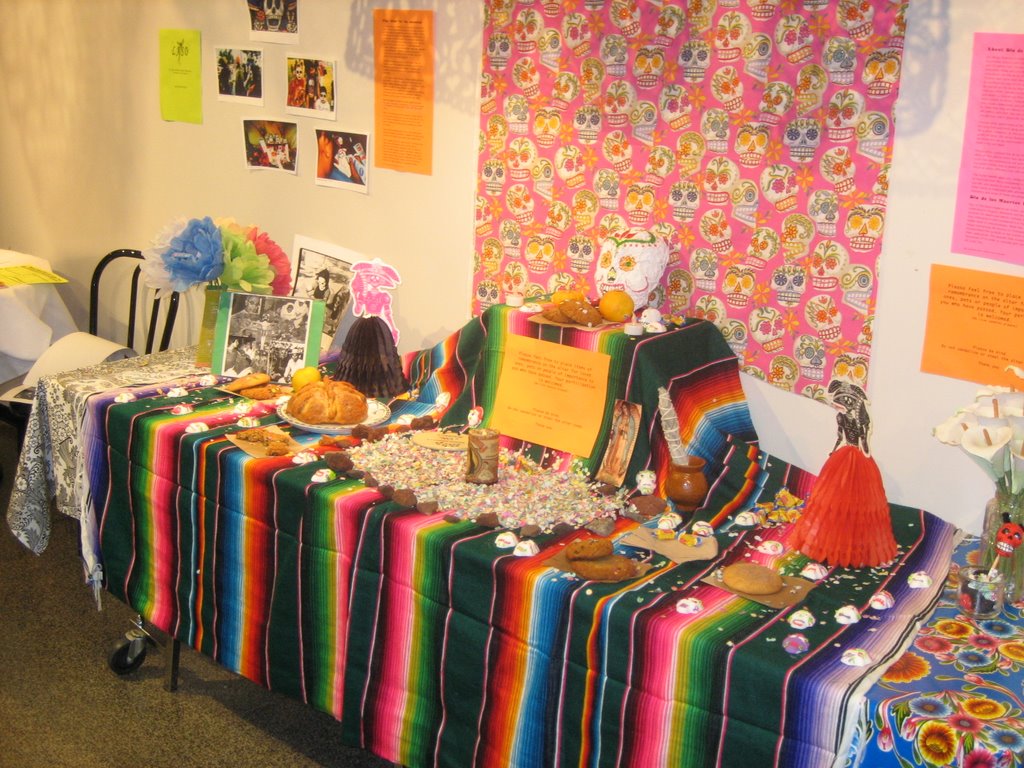
dia de los muertos, or day of the dead, is just around the corner and USF's latin american student organization, or LASO, has created a beautiful community alter to mark the occasion.


the alter is beautiful - vibrant colors, dancing skeletons, treats the living have left for the dead - and livens up the normally drab hallway located directly outside crossroads cafe. each day i visit the alter and each day it grows - collecting food, belongings, and poems that people leave behind.


the community alter is informative and educates the USF community about the history of dia de los muertos and explains how the tradition is honored in mexico, the philippines, china, guatemala, and brazil.


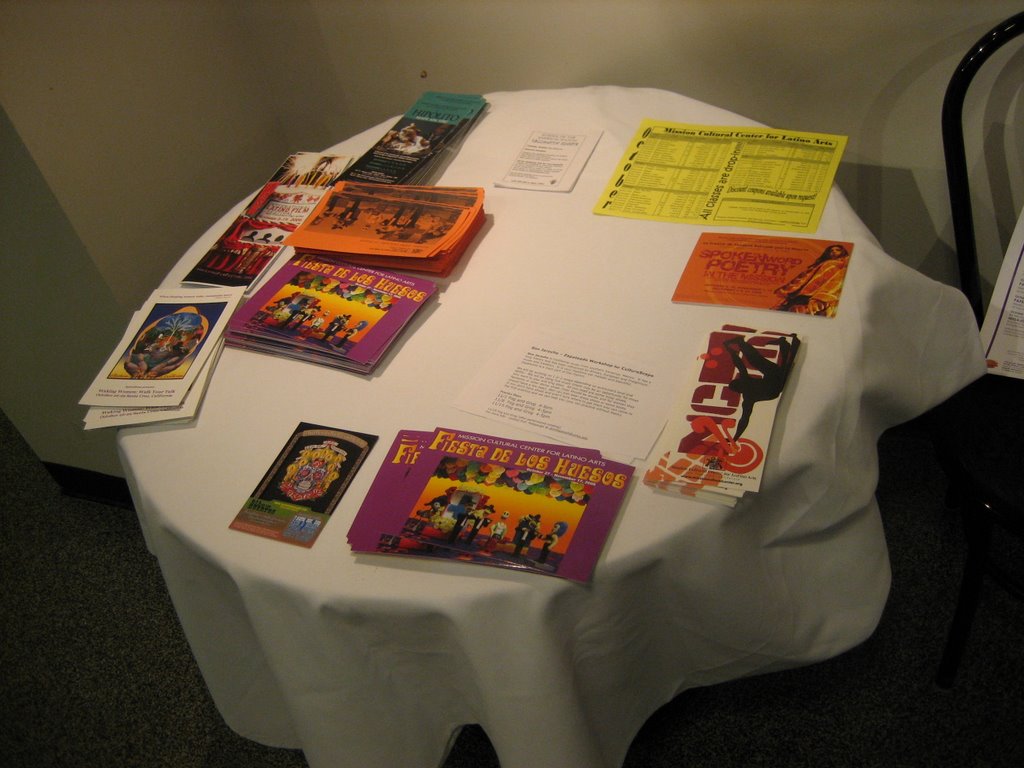
on a table next to the alter there are materials about related events taking place in san francisco - like the day of the dead procession in the mission district and a series of events sponsored by mission cultural center for latino arts.

Tuesday, October 24, 2006

off the grid

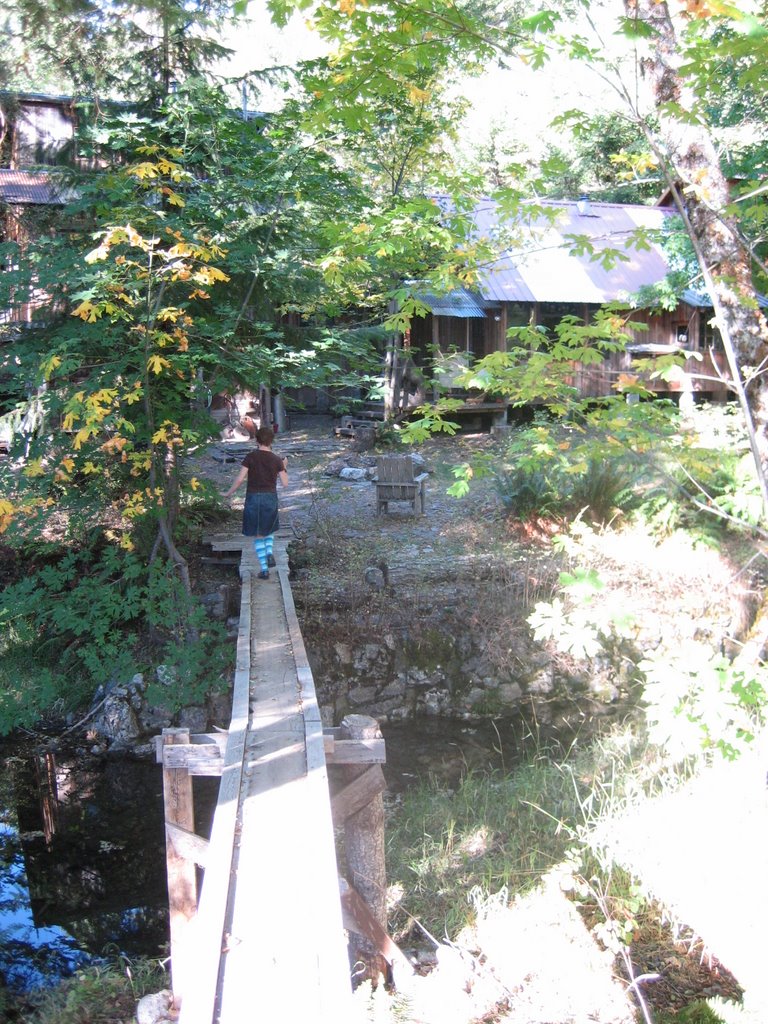
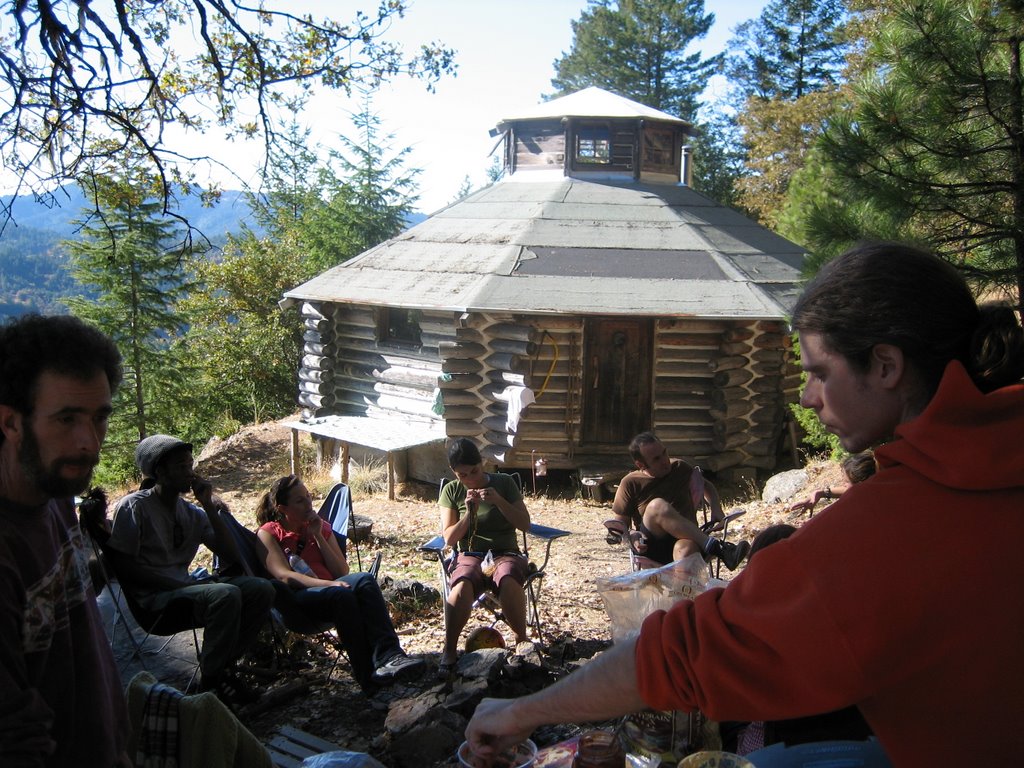
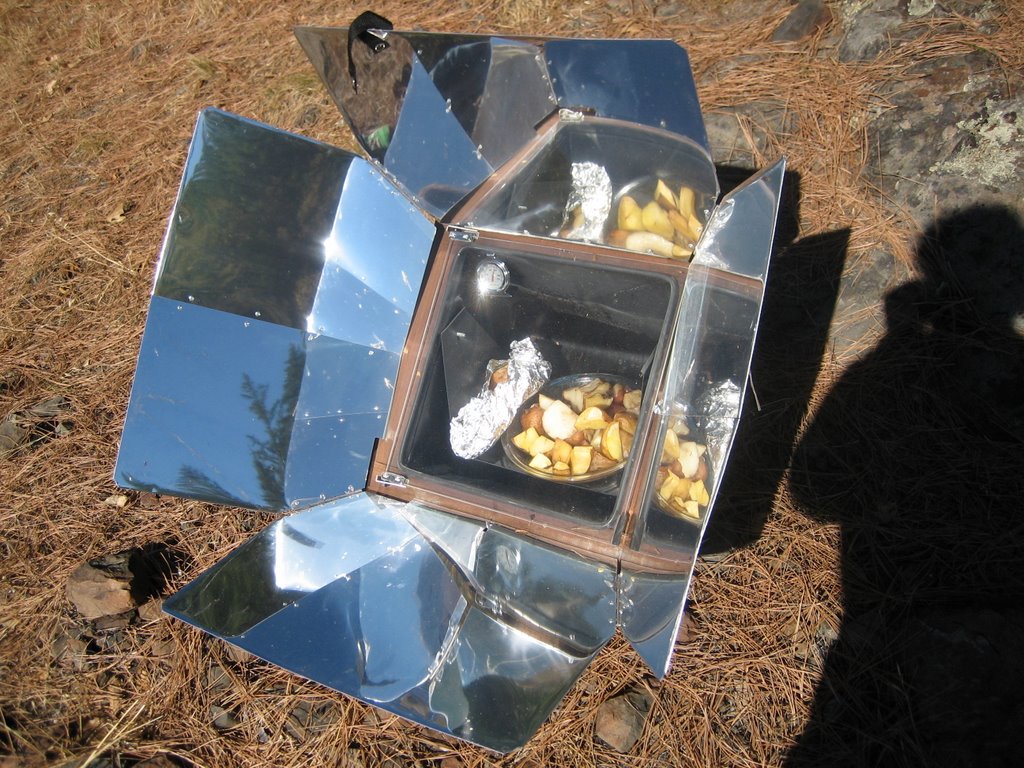
saturday, sunday, and early monday morning were spent high in the hills of humboldt, at the ranch of a friend and colleague. no electricity but lots of solar panels. no stores but plenty of food. no neighbors nearby but plenty of friends. no phones, no radio, no television, no newspaper, no internet.

time travels in different ways at the ranch and i'm nowhere near figuring out what i and we (sarah, our hosts melinda and francis, and around twenty others) experienced. in the meantime, pictures of some of the things i remember experiencing.


update: more pics from sarah.

Tuesday, October 17, 2006

usf event: media studies colloquium featuring dorothy kidd and john kim

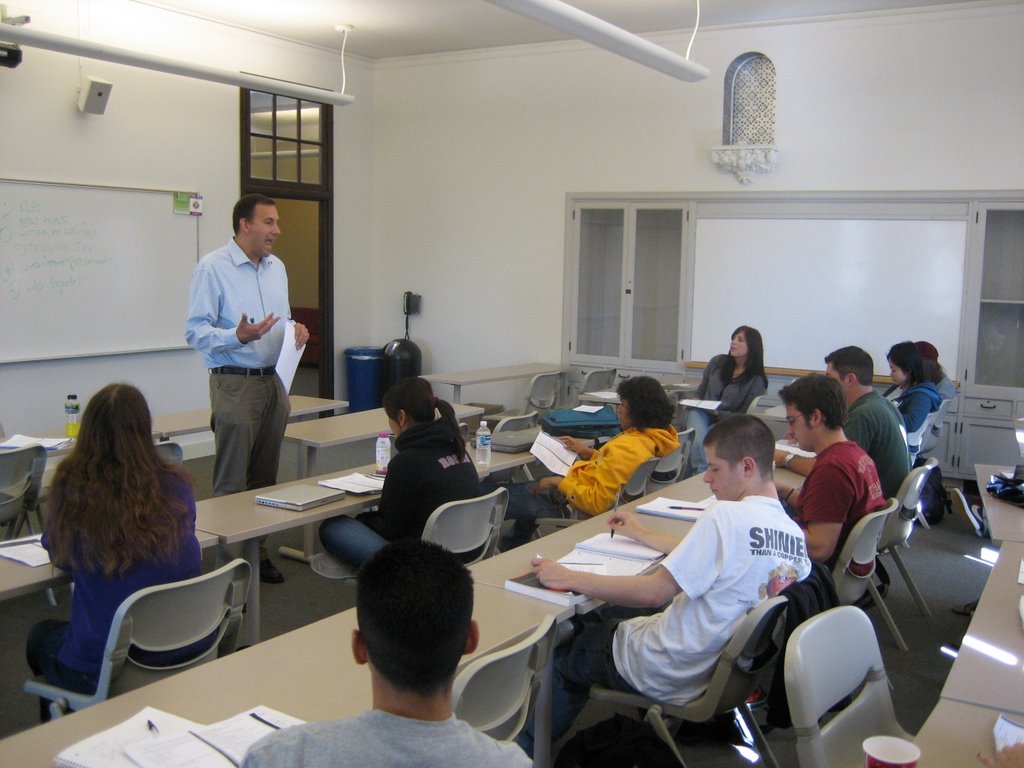
this year, john kim (USF dissertation fellow and PhD candidate in communication at stanford university) and i have been working hard to launch the media studies colloquium. actually, to be more accurate, john has been working hard on the colloquium and i've tried my best to lend a helping hand.

the project has three goals:
  1. to foster community among media studies scholars and students;
  2. to share our work with one another; and
  3. to distribute media studies work to the larger USF community.
tomorrow, the colloquium begins with dorothy kidd and john kim presenting their current work on how new free trade and intellectual property regimes are shaping culture around the world. the talks take place from 3:00 - 4:00 pm in UC 419.

fall talks include:
    david silver, "web 2.0: beyond the hype"
    november 1, 3-4 pm, UC 400

    jeremaiah opiniano, yuchengco media fellow at USF's center for the pacific rim, "the outgrowth of a journalism for a distributed philippine economy"
    november 15, 3-4 pm, UC 419
spring speakers include bernadette barker-plummer, andrew goodwin, and susana kasier. for more information, visit our wiki. see you there!

aids, act up, and angels in america

last week and this week digital democracy is all about sexualities. on tuesday, we read and discussed "ACTing UP against AIDS: The (Very) Graphic Arts in a Moment of Crisis" from tv reed's the art of protest.

reed's chapter is about AIDS and ACT UP. reed focuses on ACT UP's cultural tactics to break the silence about a disease that, by 1988, had already killed over 40,000 human beings. the tactics (or events or spectacles) were brilliant - always public, always attention grabbing, always critical of corporate capitalism, always smart. and often hilarious.

in class we discussed ACT UP as a social movement - decentered, autonomous nodes, relatively diverse, exceedingly well-trained in visual and soundbite cultures, and largely but not entirely queer. we also discussed four or five cultural tactics enacted by members and allies of ACT UP.

on thursday, peter novak, associate professor and chair of USF's performing arts and social justice, rocked the class. he began by asking us questions about AIDS. basic questions. few of us knew much. so he gave mini-lectures on the history of AIDS, some myths about AIDS, and some stark numbers that helped us understand the urgency of AIDS.

then, he offered a brief history of the role of theater and performing arts within jesuit education. the day before i requested this topic - partially out of my own curiousity and partially because i thought my students should be aware of the many historical and contemporary bridges between culture and social justice. peter also told us to find out more about ratio studiorum.

and then we read a play. not a play but two scenes. and not just any play but angels in america. USF's angels in america, directed by professor novak, opens on november 1 so i am sure the play is fresh on peter's mind. noelle read the part of harper while nick read joe - and they were fantastic. peter read a perfect rabbi isidor chemelwitz and i stumbled through louis.

for me - and, judging for the looks on students' faces - it was magic. with the lines spoken out loud everything we had read in a book came alive in a classroom. words spoken out loud can create something that wasn't there before and suddenly we were asking questions and talking about huac, homophobism, homosexuality, and heterosexuality. after the two scenes, i had a hundred questions about angels in america. luckily, i'll have some of them answered when i see part one at the NEW studio theater on lone mountain (tickets are eight bucks with USF id and twelve without).

i am impressed with my students' willingness to share ideas about sexuality and social justice. i think they'll be blown away this afternoon when we watch in class the times of harvey milk.

Monday, October 16, 2006

militainment, inc


brought to us by roger stahl, an assistant professor of speech communication at the university of georgia, militainment, inc is
a nine-part critical investigation of the militarization of popular culture. The pieces of the puzzle - from toys to reality TV - combine to form a larger picture of the integration of entertainment and military affairs. The film asks: How has war taken its place as an entertainment spectacle? and What does this mean for the ability of our democracy to consider this most destructive of human activities?
this morning i watched episode eight, "sports," and almost lost my breakfast. good, smart stuff - i'll be using this in both my teaching and research. i hope projects like this will encourage more professors to experiment with new modes for academic distribution.

Wednesday, October 11, 2006

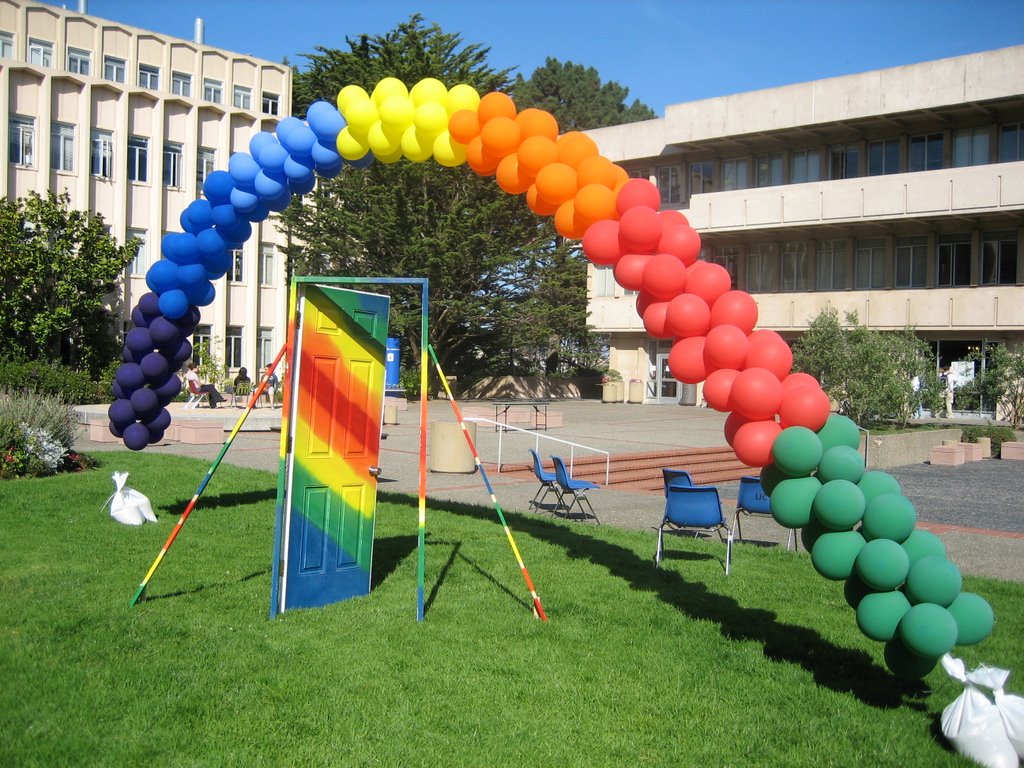
happy national coming out day!

a rainbow painted closet with the door open. floating overhead is a rainbow of balloons. and all this in the middle of campus with the sun shining fiercely. what a perfect way to get things started on national coming out day. brilliant and beautiful.

USF event: talk by marc smith, senior research sociologist, microsoft research

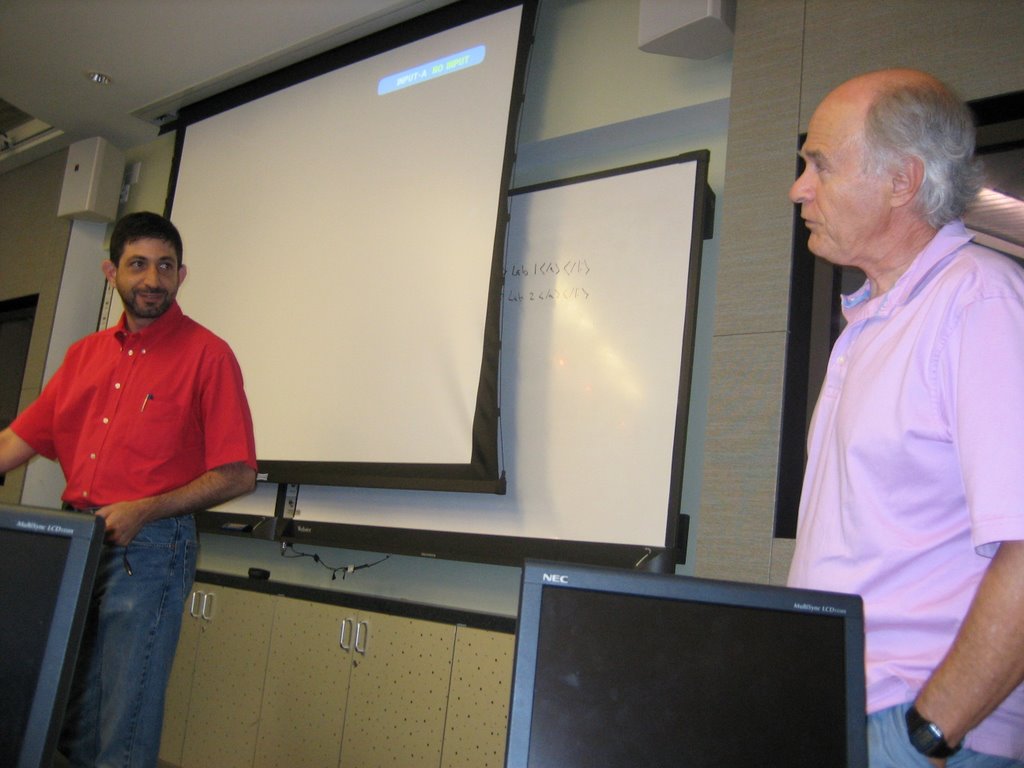
while in seattle, i spent some time over the years getting to know marc smith and his many, many ideas. tomorrow, from 12:20 - 1:20 in harney 235, he'll be speaking at USF.
    Pictures of Traces of Places, People, and Groups: Recent Work from the Microsoft Research Community Technologies Group

    Abstract: The Microsoft Research Community Technologies group focuses on the study and enhancement of computer mediated collective action systems. In this talk I will present recent developments in projects that highlight and attempt to enhance computer mediated collective action: Netscan, SNARF and AURA.

    Netscan is a set of tools and services for online communities. Netscan manufactures "social accounting metadata" about Usenet newsgroups and web boards.

    SNARF applies the concepts explored in the Netscan project to personal collections of email. SNARF provides tools to implement "social sorting."

    AURA is a platform for Pocket PCs, Smartphones, and mobile PCs that have various kinds of sensors such as barcode readers, cameras, WiFi detectors, RFID tag readers, and GPS. Using AURA, users can scan the barcodes on everyday objects in the home, office, or store and gain access to related information and services such as competitive pricing and product reviews.
this talk is co-sponsored by the departments of computer science and media studies.

update: a few pics!


(marc and USF professor benjamin wells)

Monday, October 09, 2006

they no longer hide their fear machines

from tomorrow's washington post:
    GOP officials are urging lawmakers to focus exclusively on local issues and leave it to party leaders to mitigate the Foley controversy by accusing Democrats of trying to politicize it. At the same time, the White House plans to amplify national security issues, especially the threat of terrorism, after North Korea's reported nuclear test, in hopes of shifting the debate away from casualties and controversy during the final month of the campaign.

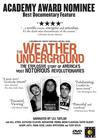
USF event: the weather underground (film screening and discussion with director)

the weather underground is an academy award-nominated documentary film about a group of young, mostly white americans who grew weary of america's violence (both domestic and overseas in vietnam) and began organizing to overthrow the government. a fascinating film about a fascinating chapter of american history. the film's director - and USF media studies professor - sam green will be there for a discussion.

details:
    tuesday, october 10
    3:30-6:00pm
    mclaren 252
this event is sponsored by the USF politics society, the peace & justice studies program, the politics department, the history department, and the philosophy department.

refreshments will be served.

an office poster

when i was small, we moved to LA for three years where, among other things, my mom began work with another mother for peace, who were responsible for, among other things, this famous poster. i've carried around this poster for years but never found an office worthy of it. a few days ago, i posted it on my office wall loudly and proudly.

Friday, October 06, 2006

this travesty called guantanamo

yesterday morning in the terrace room of USF's law school i learned more about the travesty called guantanamo. the program was the university of san francisco's contribution to Guantanamo: How Should We Respond?, a national teach-in originating from seton hall law school (some background). between office hours, a new faculty luncheon, and class, yesterday was a busy day but i was able to catch the morning event featuring two lawyers - bernard j. casey and james p. walsh - who represent guantanamo bay detainees.

jeffrey brand, dean of the law school, welcomed a packed room of between 80-100 people, mostly (i think) USF law students. dean brand's welcome was great. paraphrased: it is truly heartening to see so many people here and to see so many law students here. this is a teach-in on the travesty that is guantanamo bay. these kinds of events reflect the mission of our university and its pursuit of excellence in social justice. it is possible that once i am here at USF for a few years, i will get used to, or grow tired of, stuff like this. but for now, having a dean equate a teach in on the horrors of guantanamo bay to the mission of the university is nothing short of inspiring.

bud casey and james walsh were terrific speakers. mr casey (pictured above) is representing at least three detainees at guantanamo bay and he recounted how it has taken him more than ten months of filing papers with the government to reach national security clearance. he is now preparing to go to guantanamo (i believe shortly, like within weeks) to meet and represent his clients. at one point, bud casey projectd to a large screen the names of his clients - as well as the numbers the US government assigns them - and sort of just let them speak for themselves:
    Ghanim Abdulrahman al-Harbi (#516)

    Zainulabiden Merozhev (#1095)

    Ravil Mingazov (#702)
later, he showed a slide that said:
    habeas corpus: "the only effective means for the vast majority of detainees to challenge the lawfulness of the captivity is through habeas corpus"
it was odd to read that slide, to really soak in its meaning, especially in a room full of law students. mr casey concluded by saying that last week's torture bill gives the bush administration the right to suspend habeas corpus for anyone they say is a bad guy. i think it was casey, or perhaps peter honigsberg, who said to the students something like: this bill created a lot of work for tomorrow's attorneys.


james walsh followed with an excellent overview of what we, as thinking people, face with guantanamo. he spoke - with elegance and humor - of the legal process of the detainees. he spoke on a range of legal issues that i believe were quite relevant to the law students. that was one of the best things about this event: the speakers completely understood who their audience was and spoke accordingly. near the beginning of walsh's talk, the president of the university, stephen privett, SJ, arrived - not as a speaker but as a partipant. a university president concerned with violations of human rights: excellent.

later in the day, i received an email from john gregorek, a law student at seton hall law school, titled "Thoughts on the Seton Hall Guantanamo Teach In." with john's permission, here are his insights of the event that took place at his school:
Today, at the National Teach-in hosted by my law school, Seton Hall, I listened to attorney Julia Tarver Mason share stories from her client, a detainee at Guantánamo, regarding force feeding. She pointed out that at first, when she heard that he was being force fed, she was partly relieved. After all, she did not want her client, detainee Abdul-Rahman Shalabi, to die. Yet upon hearing Shalabi's recount of exactly what occurred during his force feeding session, she was not exactly comforted of the news of his nutrition. The irony is hard to ignore.

Shalabi described tubes bigger than his fingers forced into his nose until he passed out, a Navy doctor who inserted a tube with such violence that he started throwing up blood, and the sharing of tubes covered in blood and stomach bile for use with different detainees.

According to Ms. Mason, Shalabi said in an interview at Guantánamo that "These [detainees] are young. They are innocent. The United States thought they had information. These people don't have information. Now the situation is more severe. It has been four years now. . . . There is no law here, only injustice."

Another panelist described that Guantánamo Bay has actually held 2 children- aged 10 and 12. After listening to the teach in, and questioning whether we even have the right people (terrorists), I am very troubled by stories of force feeding and abuse. I have never proclaimed that all the men of Guantánamo are innocent, but surely some of them are. It's bad enough that many captured are the wrong people, it's laughable that we captured children (according to the panelists).

And now we are going to remove Habeas access for these people? What exactly are we doing?
(wait: "Guantánamo Bay has actually held 2 children- aged 10 and 12." what?)

it was difficult to hear yesterday's talks. it was difficult to hear about such sad, torturous, and inhumane treatment of human beings. it was difficult to hear what our american leaders are doing in the name of freedom, democracy, and national insecurity. it was difficult to hear about the masssive illegality that is my country.

at the same time, it felt good to be there. it felt good to meet peter honigsberg, the organizer of this extraordinary event and a professor of law at USF. it felt good to see so many engaged law students - if half of the future lawyers in the terrace room work for human rights not military might the world will be a better place. and it felt good to meet, via email, people like john gregorek (above), mark denbeaux (a law professor at seton hall and one of the main organizers of the national teach-in), and ann bartow (who blogged about the teach-in at feminist law professors and sivacracy). and it felt good, again, to be reminded that college campuses can be powerful spheres of debate and dissent.

Wednesday, October 04, 2006

show and tell

yesterday in digital democracy we discussed chapter six of tv reed's the art of protest. the chapter is called "we are [not] the world": famine, apartheid, and the politics of rock music." among other things, reed examines four rock events/spectacles: do they know it's christmas?, we are the world, sun city, and the nelson mandela concert.

reed uses these four events - two famine related; two anti-apartheid - to explore the relationship between rock music and social justice. through reed's lens, song/video/anthem thingies like do they know it's christmas? and we are the world are sort of noble efforts that are extremely problematic - racially, culturally, politically, economically. at the same time, through tv's lens, song/video/organizational thingies like sun city and the concert for nelson mandela are genuinely subversive and oppositional messages made and distributed through genuinely unsubversive and hegemonic structures of mass/consumer media. it's an excellent chapter.

when class began at 1:30, there were eight students, which means that nine ere missing. lame. so i gave a quiz - three questions, totally easy (Q: what was sun city opposed to? A: apartheid). within the next two to three minutes, eight students arrived - some as i barked out quiz question number one, some in the middle of the quiz, and some near the end of the quiz. by the time i finished the quiz, sixteen out of seventeen students were in class. when the quizzes were passed to me, i counted eight. the late students never even asked if they could take the quiz. i consider that a sign of integrity; i was impressed. i hope that cures the lateness problem.

speaking of timing, i was way off and we only covered about three-fourths of the chapter. we ran out of time for two reasons. first, we may have spent too much time in the first hour talking about the field trip, discussing an opportunity to serve as student representatives on a USF task force on online communities (facebook, myspace, blogs), and talking about the recent activities of former congressman mark foley. second, we had so much to say. this was easily the loudest, most participatory class period we've had. suddenly, it's 3:12, and we have three minutes left before class is dismissed.

i divided the class into four groups of four. each of them was assigned an event: do they know it's christmas?, we are the world, etc. i told them: "for thursday, bring to class as much as you can find - video, song, concert, lyrics. download anything you can and bring it to class. and one thing: in addition to bringing videos, etc, bring something that is really weird and interesting." so tomorrow, after a brief discussion of some of the things in the chapter we missed on tuesday, students will present in groups what they have found.

in the past, it would be me - as the TA, the graduate instructor, the professor - who would supply the media. now - if all goes well - it's the students. in the past, i'd cart in a tv + vcr and show them my videotapes of brazil or bladerunner or total recall. now, they search youtube, google video, and the prelinger archives. the students will find stuff and store it on their laptops or ipods. then, in class (a room that supports wireless) they'll share their findings.

i haven't ditched my old beat up copy of total recall but i'll take student show and tells over professor show and tells any day.

Monday, October 02, 2006

blogging as scholarly activity

each year, USF faculty are required to submit an academic career prospectus, or ACP. the meat of the document is in part two, which asks faculty to discuss their teaching, research, and service plans and goals for the next year. the guidelines for research are forward-thinking:
Research
a. Area(s) of primary interest and relationship to longer-term goals,
b. Publication and paper development goals, and
c. Planned research and creative work not reflected through publications or papers.
having c) in the guidelines is so cool and allows me to discuss - in addition to publications, presentations, and grants - projects like RCCS, the september project, and academic blogging.

today, the ACP is due and i made sure to include the following under research:
Academic Blogging – My blog affords me academic connections to colleagues, students, and scholarly, artistic, and activist communities. Sometimes, the connections produce professional opportunities such as presentations, publications, and collaborations. Sometimes, the connections produce intellectual opportunities like multi-authored comment threads that further nuance an issue, idea, or interpretation. I enjoy and benefit academically from such connections, and look forward to expanding such activities. Further, I will continue to use my blog to share my research with my students and to share my students’ work with my colleagues.

bush as bono

sunday bloody sunday 2.0.

Sunday, October 01, 2006

new reviews in cyberculture studies (october 2006)

it's been a long time coming, but finally - a new batch of book reviews in cyberculture studies.

[via RCCS] a new set of book reviews for october 2006:
  1. Communication Researchers and Policy-Making
    Editor: Sandra Braman
    Publisher: MIT Press, 2003
    Review: Amin Alhassan
    Author Response: Sandra Braman

  2. Material Virtualities: Approaching Online Textual Embodiment
    Author: Jenny Sundén
    Publisher: Peter Lang Publishing, 2003
    Review: Clarissa Lee
    Author Response: Jenny Sundén

  3. Star Trek: Technologies of Disappearance
    Author: Alan N. Shapiro
    Publisher: Avinus Verlag, 2004
    Review: Radim Hladik
    Author Response: Alan N. Shapiro

  4. Technology and the Dream: Reflections on the Black Experience at MIT, 1941-1999
    Author: Clarence G. Williams
    Publisher: MIT Press, 2003
    Review: Elizabeth F. Desnoyers-Colas
there's plenty more where that came from.

Thursday, September 28, 2006

field trip

what a rough, tough day it's been. how sad, and how surreal, to watch my government "debate" torture. in the end, the republicans won and bush got what he wanted: a congressional mandate to torture human beings.

luckily, this afternoon, we in digital democacy had a field trip!

we've been reading tv reed's the art of protest. last week, we read chapter 4, "revolutionary walls: chicano/a murals, chicano/a movements," which, as the title suggests, traces the many intersections between chicano/a murals and latino/a social movements.

i've always been a big fan of field trips - they are excellent learning experiences and it's always a good thing to get off campus and into the community. so on tuesday we decided we'd spend thursday in the mission. most of the students took the bus from usf (the 33); one student lives in the mission and got there in minutes; it's a 15 minute walk from steiner street to valencia, so i hoofed it.


we met at the women's building (always a sight to see). we took some time to soak it in and then started sharing our connections between the building's murals and what we learned from tv reed: that the central figure of the mural is a woman; the way the murals depicted women of various races and ethnicities; the way the murals blended indigenous culture, recent chicana/o history, and contemporary struggles and achievements; how native and western healing practices were depicted side by side. one student noted that one woman in the mural was in a wheel chair; another pointed out that the women in the murals ranged from infancy to grandmotherly; one student read, word for word, an audre lorde poem featured on the left side of the mural; and another student pointed out that all the muralists were women. i observed that one of women in the mural held a sign saying silencio = muerte, shared what that meant, and began thinking about next week's reading - reed's "ACTing UP against AIDS: The (very) graphic arts in a moment of crisis."


then we headed east to valencia and north to clarion. walking around the mission is always fun but it's extra fun when you do it when you're supposed to be in class.


clarion alley (history, google images, flickr) stretches from valencia to mission. it is full of murals - all kinds of themes, messages, sizes, and levels of artistry. we walked down the alley like a museum - sometimes alone, sometimes in twos and threes, and sometimes as one big slowly walking mass. without a doubt, the coolest thing for me was when i saw students pointing out to other students details in this or that mural: students teaching students.


on our way out of the alley, and on to our way to pancho villa, we passed this masterpiece - the favorite among many of us.


what a perfect mural - fists of fury meets feminism - painted by female teen muralists. students had a lot to say about this one and one student asked the same question i was pondering: "who's phoolan devi?" i love this mural and what it says
    emma goldman: her weapon: pen of poison

    rosa parks: her weapon: full fare bus ticket

    phoolan devi: her weapon: code breaking

    mother theresa: her weapon: relentless compassion
and, painted on the woman in the middle,
    everywoman: her weapon: rising up
later, early in the evening, sarah and i were at home watching the news. the torture bill had just passed. today, torture became officially legislated as an american value. it's been a rough, tough day but at least i have work that matters.

we'll need to plot a second field trip real soon.

technorati tag:

Wednesday, September 27, 2006

dream dissertation fellowship! USF dissertation fellowship program

are you an underrepresented ethnic minority scholar? are you planning on completing your dissertation during 2007-2008? are you in media studies or a media studies-related field? consider applying for this position:
    The University of San Francisco invites applications from underrepresented ethnic minority scholars for the USF Dissertation Fellowship Program for academic year 2007-2008.

    Program: Scholars complete the dissertation and initiate an ongoing program of scholarly or creative work, and become familiar with the usual service responsibilities of a university faculty member. Scholars teach one course in the discipline each semester and serve the University in various capacities. The Program provides a stipend of $32,000 and limited support for relocation and research-related expenses. Additional support includes office space, computer and library privileges.

    Qualifications: Scholars are members of one of the following groups: African Americans, Asian Americans, Hispanics/Latinos, or American Indians and are U.S. citizens or permanent residents. Candidates must have completed all course work leading to the doctorate by summer 2007 and must be considering a career in college teaching. We are searching in the following field: College of Arts and Sciences: Media Studies.

    Applicants should submit a letter of application (indicating area of expertise), curriculum vitae, transcripts, dissertation prospectus, brief description of research plans, evidence of teaching ability (including student evaluations), and three letters of recommendation to:

    Gerardo Marín, Ph.D., Associate Provost
    Dissertation Scholars Search
    University of San Francisco
    2130 Fulton Street, LM Rossi 4th floor
    San Francisco, CA 94117-1080

    Complete applications must be received by January 15, 2007 to ensure full consideration.

    The University of San Francisco is a Jesuit Catholic university founded in 1855 to educate leaders who will fashion a more humane and just world. Candidates should demonstrate a commitment to work in a culturally diverse environment and to contribute to the mission of the University.

    USF is an Equal Opportunity Employer dedicated to affirmative action and to excellence through diversity. The University provides reasonable accommodations to qualified applicants with disabilities upon request.

Monday, September 25, 2006

golden gate park on a hot sunny day


a two month anniversary

since friday, sarah's been out of town, visiting friends in seattle. fortunately, she returns home tuesday night! the last few days have been sunny and hot and i've spent them reading, writing, and biking in golden gate park. when sarah returns, we'll celebrate our second month in the city.

Saturday, September 23, 2006

arthur nights - october 19-22, downtown LA

arthur nights
october 19-22, 2006
the palace theatre, downtown los angeles

the four-day line-up
all artists will perform full sets
$80 for a four-night pass
all ages welcome

where else are you going to hear devendra banhart, bert jansch, espers, watts prophets, jackie beat, belong, yellow swans, grouper, and buffalo killers - all on the same night?

is it really all ages? how did they swing that?

oh, and it takes place here:

critical cyberculture studies - buy, scan, read

i have just received word that our anthology, critical cyberculture studies, is now ready for public consumption!

nyu press has created a nice web site for the book where you can a) buy the book, b) scan the table of contents, and c) read (for free!) the book's introduction titled "where is internet studies?"

Thursday, September 21, 2006

Guantanamo: How Should We Respond? - a national teach-in

during the 1960s, teach-ins on college campuses were common. the reasons for this were many, and one is that the times were extremely chaotic and violent. the teach-ins, organized despite harassment, intimidation, and sometimes violence, reminded us that college campuses were important and relevant spheres of democracy.

on october 5, 2006 there will be a national teach-in around the theme:the teach-in takes place at seton hall law school in newark, new jersey and will be broadcasted to over 200 participating campuses in 44 states.

because october 5 is near, most readers affiliated with academia won't be able to organize an event on their campuses. but as engaged scholars, events like this, especially in times like ours, merit our attention and thoughts.

this project has three main elements:

1. On October 5th, Seton Hall will host an all-day conference available at academic institutions across the United States to study the national and international implications of indefinitely detaining hundreds of individuals deemed "enemy combatants."

the speaker's list is massively diverse. topics range from "medical professionals and guantanamo" and "journalists look behind the wire" to "history of torture in the modern world" and "american detention policy: the next frontier." speakers include professors, attorneys, governmental officials, military officials, religious leaders, and human rights advocates. among the speakers are journalists from the new yorker, the new york times, the miami herald, and time magazine.

2. Beginning at 10:00 EST, the Teach-In will be available via high-quality video streams accessed through this website. Schools in earlier time zones can pick up the sessions in progress or, by accessing a recording of the earlier sessions, view the whole program from the beginning.

This teach-in is truly national. currently, as of september 20, over 200 campuses in 44 states are organizing teach-ins about guantanamo. the overwhelming majority of hosts are law schools, colleges, and universities. there are also 5 seminaries and 1 medical school participating in the teach-in. additional information regarding the technology that connects the events at seton hall to the rest of the participating campuses can be found here.

3. And, of course, participating schools can schedule their own programming instead of or in addition to some of the nationally broadcast sessions.

for example, here at USF, the following events have been organized by many, many people:
    thursday, october 5
    9:00 am - 3:00 pm
    terrace room, USF law school

    9:00 - 10:30: Attorneys Bud Walsh and Bernie Casey, both of whom represent Guantanamo Bay detainees, will present.

    10:30 - noon: Professor Richard Leo (Law School) will speak on interrogations, with emphasis on interrogations at Guantanamo.

    Noon - 1:30: Frank Lindh (father of John Walker Lindh, the "American Taliban") will speak along with a lawyer from the firm that represented John.

    1:30 - 3:00: Attorney and Professor Banafsheh Akhlaghi (Politics) will speak on representing deportees, refugees, people on the no-fly list and other people under the radar.

    3:00 pm - : We will run the Internet feed from Seton Hall, beginning with the first presentation.
i have some questions that i hope can be addressed by someone in the organizing team - or anyone who knows the answer - in the comments:
  1. is there any attempt to make this an international teach-in?

  2. is there a list of what other participating campuses are doing on a local level? in other words, i know what kind of events are happening at USF - what's going on at other campuses? there is this list, which lists the events at USF and at antioch university, but i imagine there are more, right?

  3. what are some of the foreseeable online interactions? can participants at non-seton hall campuses post questions and comments for seton hall speakers? what kinds of technologies are in place - or are being planned - to facilitate interactions between participating campuses?

  4. hey, youtube and flickr experts! what are some of the ways these technologies can be used to distribute, archive, and further distribute the teach-in?
a national teach-in on how to respond to guantanamo - what a great idea. it takes a great deal of work to organize projects like this. it also takes a great deal of courage, since so many college and university campuses, like so many other sectors of american society, are hostile to engaged debate and dissent. finally, it takes a great deal of faith to organize projects like this - faith in college campuses as spheres of relevance, spheres of creativity and inspiration, and spheres of democracy.

projects like this make me proud to be a professor.

Wednesday, September 20, 2006

september 19th

from clarissa lee i learn about 19sep, a blog "intended to provide local news, media and perspective of Thailand Coup Event on 19th September 2006 to the world." history seems to be moving way too fast these days.

Tuesday, September 19, 2006

usf event: using torture? to fight terrorism? a talk

USING TORTURE? TO FIGHT TERRORISM?
a discussion on current U.S. foreign policy in the middle east with Ray McGovern, former CIA senior analyst and a founder of VIPS (Veteran Intelligence Professionals for Sanity).
    Ray McGovern's career as a CIA analyst spanned 27 years - from the administration of John F. Kennedy to that of George H.W. Bush. His current activities are directed at shedding light on recent practices of the U.S. intelligence community. Mr. McGovern has appeared most recently on CNN, the News Hour with Jim Lehrer on PBS, and the Washington Journal on C-SPAN.
friday, september 22, 2006
1:00-3:00 pm in UC 400
refreshments will be served

Sponsored by the USF Politics Society, Department of Politics, and Peace & Justice Studies Program.

Sunday, September 17, 2006

nephews and nebraska

on saturday, sarah and i drove down to palo alto to watch the nebraska - usc football game at my sister cara's (new) home. although the cornhuskers lost, it was still a good time, mostly because of these little guys:


will, the eldest, could not get enough of sarah - and vice versa. later in the evening, when sarah started knitting a scarf, will was really curious and asked all kinds of really smart questions. he just sat and observed - patiently.

dolan, on the other hand, rarely sits still for more than a moment. but when he does, it feels like magic.

Friday, September 15, 2006

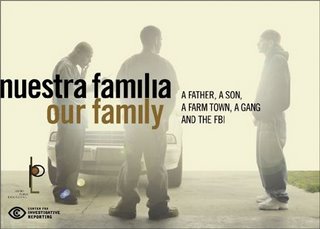
usf event: nuestra familia, our family - a documentary film

a special showing of Nuestra Familia, Our Family, a documentary film that goes deep inside california's latino gangs to reveal their devastating effect on families – and the controversial war to stop their spread.

    When: Monday, September 18, 8 p.m.
    Where: Maier Hall in Fromm Hall (old Xavier Hall)
USF graduate and investigative reporter george sanchez, who worked for three years on the project, will hold a press conference in maier hall at 7 p.m.

this special advanced screening was made possible by the center for investigative reporting. co-sponsored by the journalism minor and the department of media studies.

Thursday, September 14, 2006

more september projects in italy

we just learned that four libraries in perugia, italy - Biblioteca Augusta, Biblioteca Sandro Penna, Biblioteca Multimediale, and Biblionet - have joined the september project. here's what they are planning:
    Le Biblioteche comunali di Perugia insieme a oltre 1.100 biblioteche pubbliche, universitarie e scolastiche in 34 paesi del mondo hanno aderito al progetto internazionale The September Project promosso dalla University of Washington’s Walter Chapin Simpson Center for the Humanities in occasione della ricorrenza dell’11 settembre 2001, con l’obiettivo comune di diffondere una cultura di pace, conoscenza reciproca tra i popoli e stimolare la riflessione delle persone sui valori della libertà, della pace e della democrazia.

    A Perugia dall’11 al 16 settembre sono disponibili presso la Biblioteca Augusta un’esposizione di libri, quotidiani e riviste ed una postazione multimediale con le immagini dell’evento.

    On line sono disponibili lo spoglio di articoli di riviste (documento pdf 130 KB) possedute dalla Biblioteca Augusta, una lista di titoli (documento pdf 125 KB) posseduti dalle Biblioteche comunali riguardanti i fatti dell’11 settembre ed una selezione di siti Internet sull’argomento.
    La lista dei libri è corredata da abstract.

    Per informazioni: Biblioteca Augusta 075.577.56.24 / 577.25.05

    Sul sito The September Project sono presenti la lista delle biblioteche che hanno aderito all’iniziativa, l’elenco dei programmi organizzati dal 2004 fino ad oggi e l’accesso via rete alla comunità dei partecipanti. Le biblioteche italiane che, assieme alle Biblioteche comunali di Perugia, hanno aderito al progetto sono: Biblioteca comunale Renato Fucini di Empoli, Biblioteca civica Berio di Genova.
for more information, visit the portale comune di perugia.

the port huron project

the port huron project "seeks to explore the role of protest speech in progressive movements, and to reanimate historic protest speeches so that they might galvanize a new generation of political activists." their first project, "until the last gun is silent," looks very cool. here's the details:
    What: A performance art event organized by Mark Tribe and based on a speech given by Coretta Scott King at a 1968 peace march in Central Park.

    When: Saturday, September 16, 5:00 PM. Rain date: Sunday, September 17, 5 PM. Check www.porthuronproject.net to see if the event is postponed due to rain.

    Where: Mineral Springs field, Central Park, New York City. (directions on the web site.)
this project comes out of brown university. it will be interesting to watch.
The Port Huron Project is a series of remakes of historic protest speeches from the 1960s and early '70s. Inspired by the Port Huron Statement, the visionary manifesto of Students for a Democratic Society that helped launch the New Left movement in the United States, the Port Huron Project seeks to explore the role of protest speech in progressive movements, and to reanimate historic protest speeches so that they might galvanize a new generation of political activists. Each event will be staged at or near the site of the original speech, and will be documented using a range of older and newer media, from 16mm film to high-definition video. This documentation will then be distributed online as open source media and exhibited in various ways.

Port Huron Project 1: Until the Last Gun Is Silent is presented in conjunction with Conflux, a festival for contemporary psychogeography. Support for this project has been provided by the Pacifica Radio Archives, the Journal of Aesthetics and Protest, and Brown University.
can you imagine american academia if it took place in classrooms and in parks?

night reading and nene watching


Wednesday, September 13, 2006

thirty countries strong

in the last two days, libraries in three different countries signed up to participate in the september project. they are:
    La Universidad Francisco Gavidia, in san salvador, el salvador
    La Universdad Francisco Gavidia de El Salvador en el marco de los eventos a realizarce a nivel mundial en conmemoracion a los atendados del 11 de septiembre, informa que realizará un cine foro denominado "Despues de 5 años recordando el 11 de septiembre" en el cual se presentará la pelicula "VUELO 93" asi mismo se exhibira material de nueva incorporacion a nuestras bibliotecas sobre derechos sociales, democracia, y otras tematicas.
    The American Corner, in belgrade, serbia and montenegro

    Kherson Regional Library for Children, in kherson, ukraine
the september project 2006 is now 30 countries strong.

Tuesday, September 12, 2006

faculty positions: digital media production, interactive communication, and new media/communication technology

Assistant Professor in Digital Media Production
Florida State University

The Department of Communication at Florida State University is seeking a tenure track Assistant Professor who can serve our digital media production program, beginning August 2007. Applicants should be able to work in a variety of production settings including field, studio and/or on-line, working with students to create entertainment and/or public affairs programming and media products that can be distributed across a variety of media platforms. Experience with digital video cameras, lighting and audio equipment as well as post-production software including AVID and/or Final Cut Pro is necessary. Familiarity with Aftereffects, Pro Tools, Lightwave, and DVD authoring programs as well as podcasting and streaming video is a plus. Applicants that have research-based interests in digital media and/or issues of technology-mediated communication in addition to the production skills listed above are especially encouraged to apply. Candidates will be expected to teach two courses a semester, serve our theory and research based graduate program and have a defined program of research and/or creative production.

The Department of Communication currently serves a select group of undergraduate Media Production majors as well as graduate students in a Communication and Media Studies Masters and a Doctoral program in Communication. Applicants will also serve our new Graduate Certificate in Digital Video, a four course program open to graduate students from across the university. Candidates should have completed a Ph.D. by the Fall of 2007. For more information about the department see: http://comm.fsu.edu/

Review of applications will begin October 15th and continue until the position is filled.

Andy Opel, Ph.D.
Digital Media Search Committee Chair
Department of Communication
University Center, Building C, Suite 3100
Florida State University
Tallahassee, FL 32306-2664
DC.JobApplications@comm.fsu.edu

***

Assistant or Associate Professor
Interactive Communication
Quinnipiac University

The Quinnipiac University School of Communications seeks a full-time, tenure track assistant or associate professor in interactive communications to start August 2007. The School of Communications prepares students to produce and critically analyze content in the areas of news, public relations, entertainment and on-line media. The ideal candidate will make substantial contributions to an innovative Master's program in interactive communications, including supervision of graduate student theses and creative projects. Teaching responsibilities will also include courses at the undergraduate level in media production. We seek applicants who are engaged in research addressing emerging media and who are qualified to teach in areas of the curriculum beyond production. Professional experience and advanced degree required.

Applicants should submit cover letter, curriculum vitae, sample publications or creative works, names and contact information for three references to Dr. Raymond Foery, Chair, Department of Media Studies and Media Production, Quinnipiac University, SB-MCM, 275 Mt. Carmel Avenue, Hamden, CT 06518 or via email: Raymond.Foery@quinnipiac.edu. Final consideration of candidates will begin November 1, 2006 and continue until position is filled.
    alex halavais, a professor at quinnipiac university and one of the smartest new media scholars out there, added the following on his post to air-l (tangent: is air-l getting weird or what?!?), which i post with permission:

    There have been bunch notes out on the list recruiting faculty. I joined the faculty at Quinnipiac University in Connecticut earlier this year. I was looking for an opportunity to move from an Research 1 to a school that balances research with a dedication to teaching. Admittedly, I've only been here for a little while, but I've been very impressed with what I've seen. We have a great group of students, and despite being a large "small" school (we have the largest undergraduate program in the state, I believe), class sizes remain small, and support of faculty for teaching and research is excellent. Perhaps best of all, there is a strong entrepreneurial spirit on the campus, and the university is attracting some outstanding faculty. I suspect that if you haven't heard of Quinnipiac in the past, that will be changing.

    The School of Communication is hiring four tenure-track faculty this year, and will be continuing to add faculty in the coming years. We are looking for someone who can mix an online media production background with strong theory and research and teach in our MS in Interactive Communication. In particular, if you work in social computing it would be great to have you up here. Please don't hesitate to drop me a note, and I am happy to respond to any questions candidly.
***

Assistant Professor of Communication
University of Illinois at Chicago

A successful candidate must have interests in the study of new media, the internet, and/or communication technology in combination with the study of one or more of the following areas of department research strength: diversity, health, political, or visual studies. The candidate will also have an earned doctorate in Communication or a related field, strong promise of scholarly achievement and teaching success (at the undergraduate and graduate levels) appropriate for appointment as Assistant Professor, good prospects for external research funding, and demonstrated commitment to multidisciplinary scholarship.

Located in the heart of Chicago, UIC is a Research I University with 16,000 undergraduates, 6,500 graduate and 3,000 professional students. The Department of Communication has 11 full-time faculty, approximately 100 undergraduate majors, and 25 M.A. students. The Department is developing a doctoral program focused on the relationship between technology and communication.

The desired appointment is date for the position is August 16, 2007. Interested parties should send a full curriculum vitae, samples of relevant scholarly publications, evidence of teaching effectiveness, and four letters of reference to:

Professor Andrew Rojecki, Chair, Communication Search Committee, Department of Communication (MC-132)1007 W. Harrison St. University of Illinois at Chicago, Chicago, IL 60607-7137

Applications should be received by November 1, 2006, to receive full consideration, although the search will proceed until the position is filled. Applications from women and minorities are particularly encouraged.

Women and traditionally under-represented minorities are strongly encouraged to apply. The University of Illinois is an Affirmative Action, Equal Opportunity Employer.

***

looks like new media - and digital media and interactive media and cyberculture - is back in academic fashion with full force.

paul farmer at usf

yesterday, paul farmer - a professor, a physician, a member of the extraordinary partners in health, and the subject of tracy kidder's mountains beyond mountains - spoke at USF as part of the justice lecture series.

highlights (in no particular order except the last, which is my favorite):
  • all 500 seats were taken. nearly all of the aisle space surrounding the 500 seats was taken. and there was an overflow crowd, in crossroads cafe, that watched the talk via a stream.

  • before dr farmer was introduced, as he walked into the room and began his way towards the stage, the crowd erupted into applause. it was like a rock concert, except instead of cheering a guitarist we were cheering a humanitarian.

  • most big talks at universities involve an introduction by the president or a dean. yesterday, paul farmer was introduced by a senior nursing student (unfortunately, i did not catch her name). what a thrill it must have been for her to introduce a true hero and do it in front of 500+ people! she was awesome.

  • paul farmer and his partners in health colleagues' (now 4000) work in haiti and rwanda is visionary, inspiring, and against all odds. to hear him talk about it and to see pictures of the individuals and communities they serve was a truly remarkable experience. his talk (plus Q and A) lasted for an hour and a half; i could have listened and learned from him for many more hours.

  • paul farmer is an engaging and inspiring speaker. he is, as one can imagine, brilliant. he is also hysterical. he had all of us - students, san franciscans, professors, staff, jesuits - continuously laughing out loud - no small feat considering the massive poverty that farmer's patients endure.

  • paul farmer's talk was a perfect component to USF's one book, one community activities. for summer reading, the entire USF community was encouraged to read kidder's mountains beyond mountains. what a perfect selection for our troubled times.

  • it was great how paul farmer continually connected the work he and his colleagues do in haiti and rwanda to the social justice mission of the university of san francisco. i felt proud, excited, and a bit humbled to be a USF professor.

  • and finally, upon being asked by a student how to find one's occupational future, he answered (to the best of my memory): "find out what you love to do. and then do it for poor people. do it for justice."
it was a phenomenal experience.

Monday, September 11, 2006

september project events in argentina, italy, and peru

[crossposted from the september project blog]

from ana a. chiesa, coordinator of proyecto CIBA in córdoba, argentina:
    El Proyecto CIBA anuncia que el próximo 14 de Septiembre realizará dos taller destinados a chicos de cuarto y quinto grado de escuelas rurales Argentinas.

    Uno trabajara sobre la Alfabetización en información: "Todo lo que no sabemos sobre los libros."

    El otro es un taller de animación a la lectura: "Taller de Lunas y brujas."

    Ambas actividades son en adhesión al Proyecto Septiembre.
from patrizia gaggero, of biblioteca berio, in genova, italy:
    PROGETTO SETTEMBRE
    ...a sostegno di punti di incontro in tutto il mondo l’11 settembre

    Lunedì 11 settembre 2006

    Sala Chierici -17.00
    Incontro:
    “Operatori tra guerre e diritti negati”
    Relatore: Mizio Ferraris (Emergency Genova)

    “I bambini kamikaze: cause e soluzioni
    Relatore Pejman Abdolmohammadi (Comitato Unicef Genova)

    Biblioteca – Piano terra – 8,30/19,00
    Mostra fotografica: “La Guerra com’è”
    a cura di Emergency Genova

    Mostra bibliografica: “Per una cultura del dialogo e della non violenza”
    a cura della Biblioteca Berio

    Sala Mostre 14.00/18.00
    Children
    Olii, pastelli e prints di Natalie Saiph Massone
    Fotografie e video di Ugo Nuzzo
    Il ricavato della mostra verrà devoluto alla Fondazione contro la Fibrosi Cistica (Cystic Fibrosis Worldwide), una malattia cronica che colpisce soprattutto i bambini dei paesi più poveri e colpiti dalla guerra.

    La guerra com’è
    In questa mostra, attraverso testi, fotografie e testimonianze raccolte sul campo, Emergency racconta i caratteri delle guerre attuali: la preponderanza di vittime civili (il 90 per cento, tre su dieci bambini), gli effetti dei conflitti che durano oltre la loro fine dichiarata, il problema delle mine antiuomo – e il suo lavoro sul fronte medico-sanitario e su quello della diffusione di una cultura di pace.
and from roberto bustamante, coordinator of the cholonautas project, in lima, peru:
    I like to inform you that in Cholonautas Project we posted an article about 9/11 with links and electronical textos about the consequences of the terrorist attack.

    The link is here.

KCPW, j. willard marriott library, merrill-cazier library, and utah

this morning, joyce ogburn (director of the j. willard marriott library at the university of utah) and i were interviewed by lara jones of KCPW public radio in salt lake city, utah. (update: interview archive)

i know joyce from the university of washington, where she was, until last year, associate director of the libraries, resources and collection management services. it was a pleasure to be on the show with joyce and it was great to learn more about their "democracy and informed citizenry" events, organized in large part by university of utah librarian heidi brett.

another utah library participating in the september project is utah state university's merrill-cazier library. from their flyer:
Utah State University's Merrill-Cazier Library and Cache MicroCinema will host a film screening and discussion as part of "The September Project." Join us for a screening of Fighting Back, an episode in the award-winning documentary about the Civil Rights Movement, Eyes on the Prize.

The screening is part of the 2006 common literature experience at USU, in which students, faculty, staff and the members of the community read Warriors Don't Cry: A Searing Memoir of the Battle to Integrate Little Rock's Central High, by Melba Pattillo Beals. Following the screening, Jennifer Ritterhouse, associate professor of history at USU, will facilitate a discussion.

Sunday, September 10, 2006

september 11 events at usf

tomorrow, USF is a beehive of activity.

fr. gerard jean-juste and dr. paul farmer will be on campus for two events:
  • 12:15 p.m.: at the annual Mass of the Holy Spirit, Fr. Gerard Jean-Juste of Haiti will be awarded an honorary doctorate by University President Fr. Stephen Privett, S.J.

  • 4:00 p.m.: Dr. Paul Farmer will deliver a public lecture on “Using Medicine as a Tool for Social Justice."
this event is part of USF's justice lecture series and sponsored by the lane center for catholic studies & social thought.

while on campus, check out the book display in the lobby of gleeson library.

finally, a free and public event sponsored by USF's politics society & pi sigma alpha. USF politics professor banafsheh akhlaghi, myself, and a representative from the san francisco fire department will offer brief presentations followed by discussion. please consider swinging by - UC 222 @ 1:30pm - 3:00pm.

a sight to see

the women's building, a breathtaking building on any day but especially today with the sunday sun shining bright and fierce. everytime i pass this place i think of irina and smile.

happy birthday irina, even if it's one day late. my present is a nice long dinner and a nice long walk, redeemable the next time you're here in the city.

Thursday, September 07, 2006

what a way to start a day

from this morning's seattle pi:
Libraries encourage civic engagement

By JUSTIN WADLAND
GUEST COLUMNIST

Libraries around the world are busily preparing for Sept. 11. Throughout September and October, they will open their doors to activities and displays that encourage civic engagement.

At the Seattle Public Library, Ray Suarez, a senior correspondent at PBS, will speak about immigration issues and a film series will explore the experiences of immigrants in the United States. Suzzallo Library, on the University of Washington campus, will display media coverage of the terrorist attacks of 9/11, from the first news reports to recent books and movies. At my own library on the University of Washington-Tacoma campus, we are organizing film screenings and panel discussions that will investigate the impact of the War on Terror at home and abroad.

Over the past three years, hundreds of libraries around the world have organized similar events for the September Project, a movement to encourage people to gather at libraries in recognition of Sept. 11. All the activities occur around a date associated with significant loss and change, but the September Project is not about commemorating Sept. 11.

It's about libraries serving as places for people to talk about and engage in core American values -- democracy, citizenship and freedom -- that have eroded in waves of fear and war. "We saw it as an opportunity to take back Patriot Day," one participant told me, referring to the official designation of Sept. 11. Many who have planned activities in their libraries share this sentiment. As the fifth anniversary of 9/11 approaches, more than 350 libraries invite the kind of noise that strengthens civil society.

I trace my involvement in the September Project to feelings experienced in the days following the terrorist attacks. When President Bush declared Sept. 14, 2001, a national Day of Prayer and Remembrance, he spoke of revenge before any mention of mourning: "We will use all the resources of the United States ... to pursue those responsible for this evil, until justice is done." At the time, the close proximity of national loss and national aggression dismayed me.

Since then, the rhetoric of war and the rhetoric of grief have saturated our public forums, becoming an emulsion that corrodes our ability to comprehend other points of view. The September Project gives me and other librarians an opportunity to provide havens for conversation and understanding differences of opinion.

Participants in the September Project, from the co-directors, David Silver and Sarah Washburn, to organizers, to those who attend events, recognize Sept. 11 as a time to reflect and to discuss democracy, citizenship and freedom. Only future generations will know the true significance of Sept. 11, but we now have the opportunity to influence the flow of history.

Will we poison the future with violent reactions to fear, relinquishing liberty for safety; or through dedication to civil society, will we release the elements of freedom and democracy? This September and October, libraries that participate in the September Project offer spaces for raising, and beginning to answer, that and many other questions. Learn more about the September Project activities at http://www.theseptemberproject.org.

Justin Wadland is a librarian at the University of Washington-Tacoma Library who has participated in the September Project for three years.

Wednesday, September 06, 2006

september projects and college campuses

from leslie foster, head of government publications at william d. mcintyre library at the university of wisconsin-eau claire, news of a fascinating set of september project events:
At the University of Wisconsin-Eau Claire, the Library's Government Publications Department and the University's Political Science Department are sponsoring events.

A display, "Civic Engagement: Take Part in Democracy," has been mounted in the library's grand corridor exhibit cases and will remain there throughout September. On September 11, the DVD, "Democracy's Challenge: Reclaiming the public's role" will run continuously in the library's new information literacy and public access lab.

On Monday, September 18 at 7:00 p.m. in Schofield Auditorium, Dr. James W. Tubbs will present a program, "Presidential Powers in Times of War and Danger: Are There Limits on the President's Discretion to Act?" After a 30-45 minute presentation, there will be time for audience participation in a 15-30 minute question and answer period.
i think it's smart that the department of political science is a co-sponsor. i also like how one of the events, the display about civic engagement, will remain in the library throughout the month. and finally, what a fascinating and exceedingly relevant topic professor tubbs will address - i hope they'll record/stream it! (update: very cool - mcintyre library has a blog, called mcintyre library news.)

and over in maryland, at the paul peck institute for american culture and civic engagement at montgomery college, dr. francine jamin, the force behind their smart and award-winning jefferson café project, has organized an inspired event:
Monday, September 11, 10:00 am. Bliss Room, Commons, TP/SS Campus.

Screening and discussion of Gandhi: Pilgrim of Peace, a 50-minute documentary film about Indian leader and peace advocate Mohandas Gandhi. A "September Project" event, this program commemorates 9/11/2001 and the 100th anniversary of Gandhi's founding of the Indian nonviolent civil disobedience movement. STUDENT PARTICIPANTS AND CLASSES ARE ESPECIALLY WELCOME.
while in the great state of maryland, let's not forget what they have planned at MITH, at the university of maryland (via matt kirschenbaum):
A MITH Digital Dialogue
Tuesday, September 12, 12:30-1:45
MITH Conference Room, McKeldin Library B0135

MITH's contribution will take the form of a roundtable Digital
Dialogue on the September 11th Digital Archive: http://www.911digitalarchive.org/

According to the site, "The September 11 Digital Archive uses electronic media to collect, preserve, and present the history of the September 11, 2001 attacks in New York, Virginia, and Pennsylvania and the public responses to them."

A few questions to get us started (please do come with questions of your own): What does it mean to "archive" 9/11 on the Web? What are the boundaries of this particular Web site *as* an archive? What new or unique role do born digital materials--email, cell phone text messages, digital photographs and video, blogs, and mainstream media sites--play in the memory and preservation of 9/11? What are the particular issues and challenges involved: ethical, historiographical, and technical? How else has the Web contributed to an archiving or preservation of 9/11, including the widely viewed alternative history ("conspiracy") documentaries digitally distriubted from YouTube and similar sites?

Please note that this Digitial Dialogue will still take place during our regular Tuesday slot, on September *12*.

We have an exciting line up of Digital Dialogues scheduled for the remainder of the semester, *every Tuesday* at 12:30. Highlights of upcoming speakers include Kevin Bertram (CEO, Distributive Networks), who will present "You Can Take It With You: The Nascent Role for Mobile in the Digital Humanities," as well as visits from Daniel Pitti of the Institute for Advanced Technology in the Humanities at the University of Virginia, Jason Nelson (digital artist and poet) from Griffith University in Australia, and Stuart Moulthrop and Nancy Kaplan from the Information Arts program at the University of Baltimore. Look for our full schedule very soon.
this year more than ever libraries are designing events that are particularly relevant for their communities. no "cookie-cutter" event has emerged this year. instead, many of the events relate to and revolve around issues relevant to that library's particular community. further, many of the events are part of already existing collaborations, series, and activities - be it digital dialogues or jefferson cafes.

recently, la biblioteca universidad central del este, in san pedro de macoris, dominican republic, signed up to participate. what will they do? what kind of materials will be provided? this morning, the library system of the international islamic university, in islamabad, pakistan, signed up to participate. what kinds of events will they organize? what kind of topics will they discuss?

for the second year, the university of haifa library (english version of web site) is participating. their event is as follows:
During the months of July and August 2006 the city of Haifa, Israel, was under terror attacks from Lebanon, as was the Northern part of Israel.

We decided to prepare a web site, as part of the September 11 project, that describes what happens to us, librarians living and working in Haifa, during that period.
the web site is a real-time archive of life on a college campus during war.